February in San Antonio means one thing for serious baseball players: spring ball is right around the corner. Whether you’re gearing up for school ball, select team tryouts, or tournament season, the work you put in now determines how you’ll perform when games start counting. The athletes who show up ready on day one are the ones who’ve been preparing while everyone else was waiting for the season to begin.
This isn’t about cramming in last-minute training—it’s about strategic preparation that builds on the foundation you’ve developed and sharpens the skills that matter most when competition arrives. Here’s a comprehensive pre-season checklist covering the drills, strength work, and mindset preparation that will help you step onto the field ready to dominate.
Evaluate Where You Are Right Now
Before diving into pre-season training, honest self-assessment sets the direction for effective preparation. Where are you strong? Where do you need work? What specific skills will determine your success this spring?
Athletes who train at Ball 2 Barrel Baseball Academy benefit from biometric assessments using HitTrax, Rapsodo, and K-Motion technology that provide objective data on current performance levels. But even without advanced technology, you can evaluate key areas. Record your swing and throwing mechanics on video. Time your 60-yard dash. Track how many quality at-bats you’re getting in cage sessions. Note where your consistency breaks down under fatigue.
This baseline tells you exactly what to prioritize in the weeks ahead. A hitter struggling with off-speed pitches needs different preparation than one whose swing mechanics fall apart in late innings. A pitcher with solid velocity but inconsistent command requires different focus than one who needs to add two or three miles per hour to compete at the next level.
Hitting Drills That Translate to Game Performance
February cage work should mirror game situations, not just accumulate swings. Quality over quantity becomes essential as you prepare for live competition.
Tee Work With Purpose: Every tee session should target specific mechanical elements. Work inside pitches with the tee positioned front and inside. Address outside pitches with proper extension. Practice driving the ball to the opposite field. Ten focused swings on a specific skill beat fifty mindless cuts every time.
Front Toss Timing Drills: Soft toss and front toss allow you to groove timing and rhythm before facing live velocity. Focus on consistent load timing, keeping your hands back until the ball enters the hitting zone, and driving through the ball rather than swinging around it.
Live At-Bat Simulation: As February progresses, increase the intensity of your batting practice. Track pitch counts mentally. Work situational hitting—moving runners, two-strike approaches, driving in runs from third with less than two outs. This mental engagement transforms cage sessions into game preparation.
Off-Speed Recognition: If you have access to pitching machines with variable speeds or live arms throwing breaking balls, dedicate significant time to off-speed recognition. The transition from cage work to live pitching trips up more hitters than any other factor. Train your eyes to identify spin and location early in the pitch’s flight.
Arm Care and Throwing Progression
Pitchers and position players alike need intentional throwing programs leading into spring ball. The arm isn’t a machine you can simply turn on after weeks of inactivity—it requires systematic preparation.
Long Toss Progression: Start with shorter distances at controlled intensity, gradually extending range and effort over several weeks. Long toss builds arm strength and conditions the shoulder and elbow for the demands of competition. Don’t skip steps trying to rush the process—arm injuries derail more promising seasons than any other factor.
Bullpen Progression for Pitchers: Pitchers should work through organized bullpen sessions that progress from fastball command to incorporating secondary pitches. Early February bullpens might focus entirely on fastball location and mechanical consistency. By late February, you should be working full pitch arsenals in simulated game sequences.
Daily Arm Care: Band work, shoulder strengthening exercises, and proper warm-up routines aren’t optional—they’re essential injury prevention. Ten to fifteen minutes of arm care daily takes far less time than recovering from an injury that proper preparation could have prevented.
Fielding Fundamentals and Game-Speed Reps
Defensive preparation often gets overlooked in pre-season training, but the players who separate themselves defensively are typically the ones getting the most reps.
Ground Ball Progression: Start with routine grounders focusing on proper footwork, fielding position, and transfer to throwing. Progress to balls hit to your backhand and glove side, then add game-speed intensity. Work the double play turn if you’re a middle infielder. Practice the stretch and picks if you play first base.
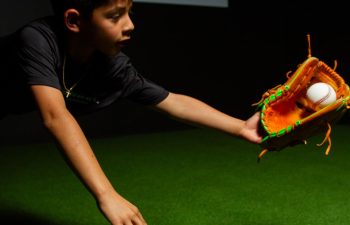
Fly Ball Work: Outfielders need reps tracking balls off the bat, reading angles, and making throws to bases. Work on going back on balls over your head—the skill that separates good outfielders from great ones.
Situational Reps: Work through game situations mentally and physically: runner on second with no outs, bases loaded with one out, runner tagging from third. The more scenarios you’ve rehearsed, the faster you’ll react when they happen in games.
Strength and Conditioning That Supports Performance
Pre-season strength work should emphasize power development and sport-specific conditioning rather than simply building muscle mass. Baseball requires explosive rotational power, first-step quickness, and the endurance to maintain performance through long games and weekend tournaments.
Rotational Power Development: Medicine ball throws, rotational cable exercises, and explosive hip movements build the power that drives bat speed and throwing velocity. These exercises train the kinetic chain that transfers energy from the ground through the core and into the swing or throw.
Lower Body Explosiveness: Box jumps, broad jumps, and lateral agility drills develop the fast-twitch muscle fiber activation that shows up in first-step quickness, base running, and defensive range. Sprint work—both linear and lateral—conditions the specific energy systems baseball demands.
Core Stability: A strong, stable core transfers power efficiently while protecting the spine and hips from injury. Planks, anti-rotation exercises, and dynamic core movements should feature in every pre-season training session.
Conditioning for Baseball: Avoid long, slow distance running that builds the wrong energy systems for baseball. Instead, focus on interval training that mimics the game’s demands—short bursts of maximum effort followed by recovery periods. Sprint work, shuttle runs, and high-intensity intervals prepare your body for the actual physical demands of competition.
Mental Preparation: The Difference Maker
Physical preparation gets you ready to compete. Mental preparation determines whether you’ll perform at your best when pressure intensifies. The most talented players don’t always succeed—the most mentally prepared ones usually do.
Visualization Practice: Spend time each day mentally rehearsing successful at-bats, defensive plays, and pitching sequences. See yourself executing under pressure. Feel the confidence that comes from preparation. Research consistently shows that mental rehearsal activates the same neural pathways as physical practice, reinforcing the patterns you want to execute.
Process Over Outcome: Train yourself to focus on execution rather than results. You can’t control whether a line drive finds a glove or a hole—you can only control your approach, your mechanics, and your effort. Pre-season is the time to build the mental habits that keep you focused on controllable factors during competition.
Competitive Mindset Development: Seek out competitive situations in practice. Embrace the pressure of cage competitions, intersquad games, and training challenges. The athletes who thrive under game pressure are the ones who’ve practiced performing when something is on the line.
Failure Recovery: Baseball guarantees failure—even the best hitters fail seven out of ten times. Develop mental strategies for moving past strikeouts, errors, and bad at-bats. The ability to flush a mistake and compete fully on the next pitch separates players who reach their potential from those who don’t.
Building Your Pre-Season Schedule
Effective pre-season preparation requires planning, not just good intentions. Map out your February training schedule with specific focus areas for each day.
A balanced week might include two to three hitting sessions, two throwing or bullpen days, two strength and conditioning workouts, and daily flexibility and arm care. Position players should incorporate defensive work at least twice weekly. Mental training can happen daily—even ten minutes of visualization while falling asleep reinforces competitive readiness.
The key is consistency over intensity. Showing up every day for focused training produces better results than sporadic marathon sessions that leave you too sore to train the next day.
Train With Purpose at Ball 2 Barrel Baseball Academy
Spring ball success starts with pre-season preparation, and Ball 2 Barrel Baseball Academy provides San Antonio athletes with the facilities, coaching, and technology to maximize every training session. From biometric assessments that identify exactly where to focus your development to expert instruction in hitting, pitching, fielding, and mental performance, our comprehensive approach builds complete players ready to compete at elite levels.
If you’re serious about showing up ready when spring ball arrives, now is the time to train with purpose. Contact Ball 2 Barrel Baseball Academy to schedule your evaluation and start preparing to dominate this season.
Discipline. Develop. Dominate.
Posted on behalf of
9111 Broadway
San Antonio, TX 78217
Phone: (210) 578-5240
Email: [email protected]
Opening Hours
Monday - Friday 3 pm - 8 pm
Saturday 9 am - 8 pm
Sunday 12 am - 7 pm