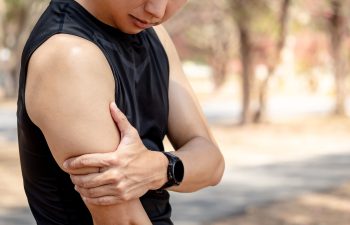
A pitcher’s arm is one of the most extraordinary—and most vulnerable—instruments in all of sports. The forces generated during a single pitch would tear most people’s shoulders apart. Elite pitchers throw hundreds of times per week, creating those forces over and over again, across seasons that span years. How do they do it? And more importantly, how do young pitchers in San Antonio build the kind of arm that lasts?
The answer isn’t talent. It’s not genetics. It’s a disciplined, intentional approach to arm care, mechanics, and recovery that most young pitchers never learn until it’s too late. At Ball 2 Barrel Baseball Academy, we build it from the start.
What Actually Happens When You Throw
Before you can protect your arm, you need to understand what you’re asking it to do. A baseball pitch—particularly a high-velocity throw—puts extraordinary demands on the shoulder and elbow. During the acceleration phase alone, the arm generates rotational forces that rival those measured in high-performance machinery. The muscles, tendons, ligaments, and connective tissue surrounding the joint work in precise coordination to harness and control that energy.
When mechanics break down, that energy doesn’t disappear—it gets absorbed by structures that weren’t designed to handle it. The result is the kind of cumulative stress that leads to UCL tears, rotator cuff damage, and the increasingly common phenomenon of young pitchers undergoing major elbow surgery before they ever finish high school.
Understanding your arm means understanding that power alone is never the goal. Efficient, repeatable mechanics that generate velocity through your entire kinetic chain—not your arm—are what separate pitchers who last from those who don’t.
The Kinetic Chain: Your Arm Is the Last Link
Here’s one of the most important concepts in pitching development, and one of the most consistently misunderstood: your arm doesn’t throw the ball. Your entire body does.
Velocity and power begin in your legs and core, travel through your torso, and are delivered through your shoulder and arm at the end of the chain. When every link in that chain fires correctly and in sequence, the arm experiences manageable stress. When any link breaks down—a weak core, improper hip rotation, poor stride mechanics—the arm compensates, absorbing forces it was never meant to handle.
This is why arm care begins long before you step into the bullpen:
- Lower Body Mechanics: Proper stride length, hip-to-shoulder separation, and drive off the rubber generate the foundational force that fuels an efficient pitch. Pitchers who skip leg work undermine their mechanics at the source.
- Core Stability: The core is the transfer point where lower-body power becomes upper-body velocity. A weak core creates mechanical inefficiency and puts excess load on the shoulder and elbow.
- Hip-to-Shoulder Separation: The delay between hip rotation and shoulder rotation is where elite pitchers create whip. When this separation breaks down, pitchers compensate with arm strength—exactly the kind of compensation that accelerates wear.
- Arm Path Consistency: A repeatable, mechanically sound arm path reduces stress on the joint and improves both velocity and command. Deviations in arm path create unpredictable forces on vulnerable structures.
At Ball 2 Barrel, our Rapsodo Pitching 2.0 system measures velocity, spin rate, break, and pitch efficiency in real time—giving our coaches objective data to identify exactly where mechanical inefficiencies exist before they become injury risks. Our two dedicated pitcher practice bullpens provide the space and focused environment for pitchers to work on these mechanics intentionally, with coaching feedback and technology guiding every session.
Arm Care: What It Actually Means
“Arm care” has become a buzzword in youth baseball circles, but it’s often misapplied or misunderstood. Real arm care is a systematic, year-round practice—not something you do when your arm feels tired.
- Warm-Up Protocols: A proper arm warm-up gradually increases blood flow and tissue temperature before any throwing begins. Dynamic stretching, band work, and a progressive long-toss routine prepare the arm for the demands of pitching far more effectively than a few casual throws. Skipping this step is one of the most common causes of early-season arm problems.
- Pitch Count and Rest: The science on pitch counts is clear and the data is alarming—youth pitchers who exceed age-appropriate pitch limits are dramatically more likely to undergo arm surgery. Rest isn’t optional; it’s structural. The arm needs time between outings to recover at the tissue level, even when it doesn’t feel sore.
- Strength and Conditioning for Pitchers: Targeted exercises that strengthen the rotator cuff, scapular stabilizers, forearm flexors, and posterior shoulder are essential for arm health. These aren’t glamorous gym movements—they’re the foundational work that keeps the shoulder joint stable under the forces of pitching. Our strength and conditioning program at Ball 2 Barrel addresses exactly this kind of baseball-specific training.
- Stretch Classes and Mobility Work: Flexibility in the hip flexors, thoracic spine, and shoulder capsule directly affects a pitcher’s ability to maintain mechanical efficiency. Tight muscles force compensations. Our dedicated stretch classes help pitchers build and maintain the mobility that supports healthy mechanics across a full season.
- Cool-Down and Recovery: Post-outing care—light throwing, stretching, and ice if needed—supports the recovery process and helps pitchers come back ready for the next session. Recovery isn’t passive; it’s part of training.
The Summer Pitching Trap
June is prime baseball season in San Antonio, and it’s also when arm care most often breaks down. Summer tournaments create a compressed schedule of games with shortened rest periods. The pressure to win—and the pressure young pitchers feel to compete—leads to overuse patterns that compound week after week.
Summer baseball is where careers are made. It’s also where the habits that end careers often get established.
The pitchers who emerge from summer baseball stronger than they entered are the ones who treat arm care as a non-negotiable—who communicate with coaches and parents when their arm is tired, who prioritize their recovery routine even when everyone else is moving on to the next game, and who understand that protecting their arm is an act of competitiveness, not weakness.
Long-term development requires a long-term arm. The pitcher who’s healthy in June, July, and August—and in September, and next spring, and the season after that—has an enormous advantage over the one who emptied the tank chasing early-summer wins.
Building a Pitcher Who Lasts
The best pitching development programs don’t just build velocity. They build durable, efficient pitchers who can perform at a high level across a long career. That requires:
- Mechanical efficiency that generates power without excessive arm stress
- Data-driven feedback that catches problems before they become injuries
- Targeted strength work that keeps supporting structures strong
- Consistent recovery habits that allow the arm to handle increased demands over time
- A coaching environment that prioritizes long-term development over short-term performance
This is exactly the philosophy behind Ball 2 Barrel Baseball Academy’s approach to pitcher development. Our technology gives pitchers and coaches objective insight into what’s actually happening on every pitch. Our bullpens and coaching staff provide the focused environment for intentional mechanical development. Our strength, conditioning, and stretch programs address the full-body foundation that keeps arms healthy. And our academy structure ensures that pitchers follow consistent protocols rather than piecing together random advice from different sources.
Start Taking Care of Your Arm at Ball 2 Barrel Baseball Academy
If you’re a pitcher in San Antonio who’s serious about your development—and serious about having an arm that lasts through high school, college, and beyond—Ball 2 Barrel Baseball Academy provides the comprehensive training environment you need. From our Rapsodo Pitching 2.0 technology to our dedicated bullpens, strength and conditioning programs, and stretch classes, every aspect of our academy is built to develop complete pitchers who throw hard, throw smart, and throw for a long time.
Contact Ball 2 Barrel Baseball Academy at 9111 Broadway in San Antonio to learn about our pitcher development programs and membership options.
Discipline. Develop. Dominate.
Posted on behalf of
9111 Broadway
San Antonio, TX 78217
Phone: (210) 578-5240
Email: [email protected]
Opening Hours
Monday - Friday 3 pm - 8 pm