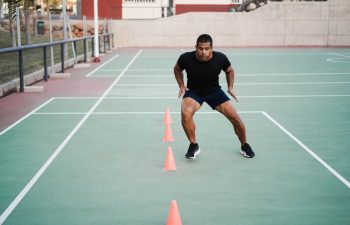
When most people think about baseball development, they picture batting cages, bullpen sessions, and endless ground balls. Hitting, pitching, and fielding mechanics are the heart of the game, and they deserve the attention they get. But there’s another piece of the puzzle that many young players and parents overlook: speed and agility.
Baseball is a game of short, explosive bursts. The difference between safe and out, a diving catch and a base hit, or a stolen base and a wasted opportunity often comes down to a fraction of a second. At Ball 2 Barrel Baseball Academy in San Antonio, our coaches bring decades of playing and coaching experience from the collegiate and professional levels, and we build speed and agility into athlete development alongside hitting, pitching, fielding, and strength and conditioning. Because the best players aren’t just skilled. They’re athletic.
Here’s why speed and agility training deserves a bigger place in your player’s development plan.
Baseball Is a Game of First Steps
Unlike sports where athletes run continuously, baseball rewards quick, powerful movement over short distances. Think about how often the game comes down to a few explosive steps:
- Getting Out of the Box: A quick first step can turn routine ground balls into infield hits.
- Stealing Bases: A fast jump and acceleration can put a runner in scoring position.
- Taking the Extra Base: Speed around the bases puts pressure on the defense.
- Range in the Field: Infielders and outfielders with quick reactions can get to more balls.
- Covering Bases and Backing Up Plays: Agility helps players get where they need to be.
- Fielding Bunts and Slow Rollers: Pitchers and corner infielders need quick, controlled movement.
Top-end speed matters, but in baseball, acceleration and change of direction often matter even more.
Speed vs. Agility: What’s the Difference?
These terms are often used together, but they describe different skills:
- Speed: How fast a player can move in a straight line, including acceleration and top-end sprinting.
- Agility: How quickly a player can change direction, stop, start, and react to what’s happening on the field.
- Quickness: How fast a player can react and take that first step.
A well-rounded athlete develops all three. A shortstop, for example, needs to read the ball off the bat, take an explosive first step, change direction, and set their feet to make an accurate throw, all in a matter of moments.
How Speed and Agility Improve Every Part of the Game
Speed and agility training doesn’t just make players faster runners. It supports nearly every baseball skill:
On the Bases
Faster, more efficient base runners create pressure. Defenses rush throws, pitchers pay extra attention to runners, and more opportunities open up for the entire lineup.
In the Field
Better footwork and change of direction help fielders get to more balls and get into strong throwing positions. Good agility can also help players field cleanly and stay balanced.
At the Plate
Hitting starts from the ground up. Athletes who develop explosive lower-body power and body control often have a stronger foundation for generating force in their swing.
On the Mound
Pitching requires balance, coordination, and the ability to transfer energy efficiently through the body. Athletic development supports better movement patterns overall.
Speed Can Get You Noticed
For high school players with college goals, athleticism matters. Speed and agility are among the tools that coaches and scouts often evaluate, and running times are commonly measured at showcases and camps. A player who can run well and move efficiently brings value in multiple ways, even on days when the bat isn’t hot.
While every player’s path is different, developing speed and agility gives athletes one more way to stand out.
The Good News: Speed Can Be Trained
Some players are naturally fast, but speed and agility aren’t just genetic gifts. With the right training, athletes can improve how they move. Effective speed and agility development focuses on:
- Proper Running Mechanics: Arm action, posture, and foot placement.
- Acceleration Technique: How to explode out of a stance or first step.
- Deceleration and Change of Direction: Stopping and redirecting under control.
- Footwork Drills: Ladder work, cone drills, and shuffles that build coordination.
- Reaction Training: Drills that improve response to visual and verbal cues.
- Lower-Body Strength and Power: Stronger legs and hips can support more explosive movement.
- Mobility and Flexibility: Healthy range of motion supports efficient movement.
Age-Appropriate Training Matters
Speed and agility training should look different for a 9-year-old than for a 17-year-old. At Ball 2 Barrel, we work with athletes from elementary school through high school, and training is tailored to age and development:
- Elementary Age (7 to 11): Focus on fun, coordination, balance, and basic movement skills.
- Middle School (12 to 14): Build proper mechanics, footwork, and body control as athletes grow.
- High School (15 to 18): Develop power, acceleration, and sport-specific speed to compete at higher levels.
Young athletes should always train with proper supervision, warm-ups, and recovery. More isn’t always better, and quality movement comes first.
Speed and Agility Help Reduce Injury Risk
Learning how to accelerate, decelerate, and change direction with good form doesn’t just improve performance. It may also help athletes move more safely. Poor mechanics can place extra stress on joints and muscles. Training that builds strength, balance, and body control can help athletes handle the demands of the game more effectively.
If your athlete has pain, a previous injury, or a medical condition, check with a healthcare provider before starting a new training program.
Why the Off-Season Is the Perfect Time to Get Faster
Fall and winter are ideal times to focus on athletic development. Without the demands of a full game schedule, players have more time to build strength, refine movement, and develop explosive speed. Improvements made now can pay off when spring ball arrives.
How Ball 2 Barrel Develops Complete Athletes
At Ball 2 Barrel, speed and agility training is part of a complete approach to player development. Our programs include:
- Speed and Agility Training: Build explosiveness, footwork, and quickness.
- Strength and Conditioning: Develop a strong, athletic foundation.
- Hitting, Pitching, and Fielding Instruction: Refine mechanics with expert coaching.
- Technology-Driven Assessments: HitTrax, Rapsodo, K-Motion, and TrackMan help track progress.
- Individual Lessons and Small Group Classes: Group classes are capped at four athletes for personalized attention.
- Membership Programs: Prospect, Elite, and Private Development options.
Speed and Agility FAQs
- Can my child really get faster? Yes. While natural ability varies, proper training can improve mechanics, acceleration, and movement efficiency.
- What age should players start speed and agility training? Young players can benefit from age-appropriate movement and coordination work, with more advanced training as they grow.
- Will speed training help my hitting and pitching? Athletic development supports better movement, balance, and power throughout the game.
- How often should athletes train speed and agility? It depends on age, schedule, and goals. Our coaches can help create a plan that fits your athlete.
Build a Faster, More Athletic Player at Ball 2 Barrel
Great baseball players aren’t built in the batting cage alone. Speed and agility can be the difference-maker that helps your athlete make more plays, create more opportunities, and compete with confidence.
Train with Ball 2 Barrel Baseball Academy this off-season. Visit us at 9111 Broadway, San Antonio, TX 78217. We’re open Monday through Friday from 3 p.m. to 8 p.m. Discipline. Develop. Dominate.
Posted on behalf of
9111 Broadway
San Antonio, TX 78217
Phone: (210) 578-5240
Email: [email protected]